In early 2025 I was studying for a management entrance exam. Six to eight hours a day, every day, alone in a room with my books and a phone I did not trust. I needed a timer. Just a simple, honest timer. I downloaded six. Every one of them let me down in its own way. So I did the only thing that made sense at 1am with a syllabus I was behind on. I started designing my own.
Six months later Lapse went live on the Google Play Store. This is the story of how it got there.
Where it started
The brief was personal long before it was professional. I did not want features. I wanted two answers. How long was I actually focusing, and when in the day was my mind actually sharp. That was it. And somehow, across an entire app store, nothing would tell me both without burying it under noise.
So I started writing things down. Every app I tried, every thing that annoyed me, every small feature I wished existed while I sat there frustrated. Those late-night notes slowly became a competitive audit. The audit became a brief. And the brief, almost without me noticing, became Lapse.
Six tried, six failed differently
I did not just download the top six timers. I lived inside them. Forest, Pomofocus, Be Focused, Focus Keeper, Focus To-Do, and Tide. I judged each one against five things that actually mattered to me. Could it show me patterns. Was it flexible. Was it useful or just decorated. Did it make me anxious. And how much friction stood between me and simply starting.
A painful pattern showed up. The apps were splitting into two camps and both had given up on me. One camp was bloated, drowning a simple timer under tasks and tags and reminders, all engineered to look impressive in a screenshot. The other camp was all surface, beautiful and empty, with nothing underneath to actually learn from.
Nobody had built for the person sitting where I was sitting. Someone who wanted depth and quiet at the same time. That absence stopped feeling like a complaint and started feeling like a reason to build.
Listening before drawing
I could have started sketching that night. I wanted to. But I needed to know the frustration was not just mine, so I made myself talk to people first. Eleven of them. Exam aspirants running on no sleep, developers chasing flow, students stretched between jobs and deadlines. Three questions each. What are you using. What do you hate about it. If you could build your own, what would it do.
One word kept surfacing, unprompted, four separate times. Honest. People did not want to be gamified or guilt-tripped. They wanted a tool that just told them the truth. Two of those voices stayed with me long enough to become the people I designed for. Sidhart, a developer who needed long stretches of focus without an app tapping him on the shoulder. And Samiksha, an exam aspirant whose days swung from brilliant to broken, exhausted by apps that punished her for the broken ones.
Designing by subtraction
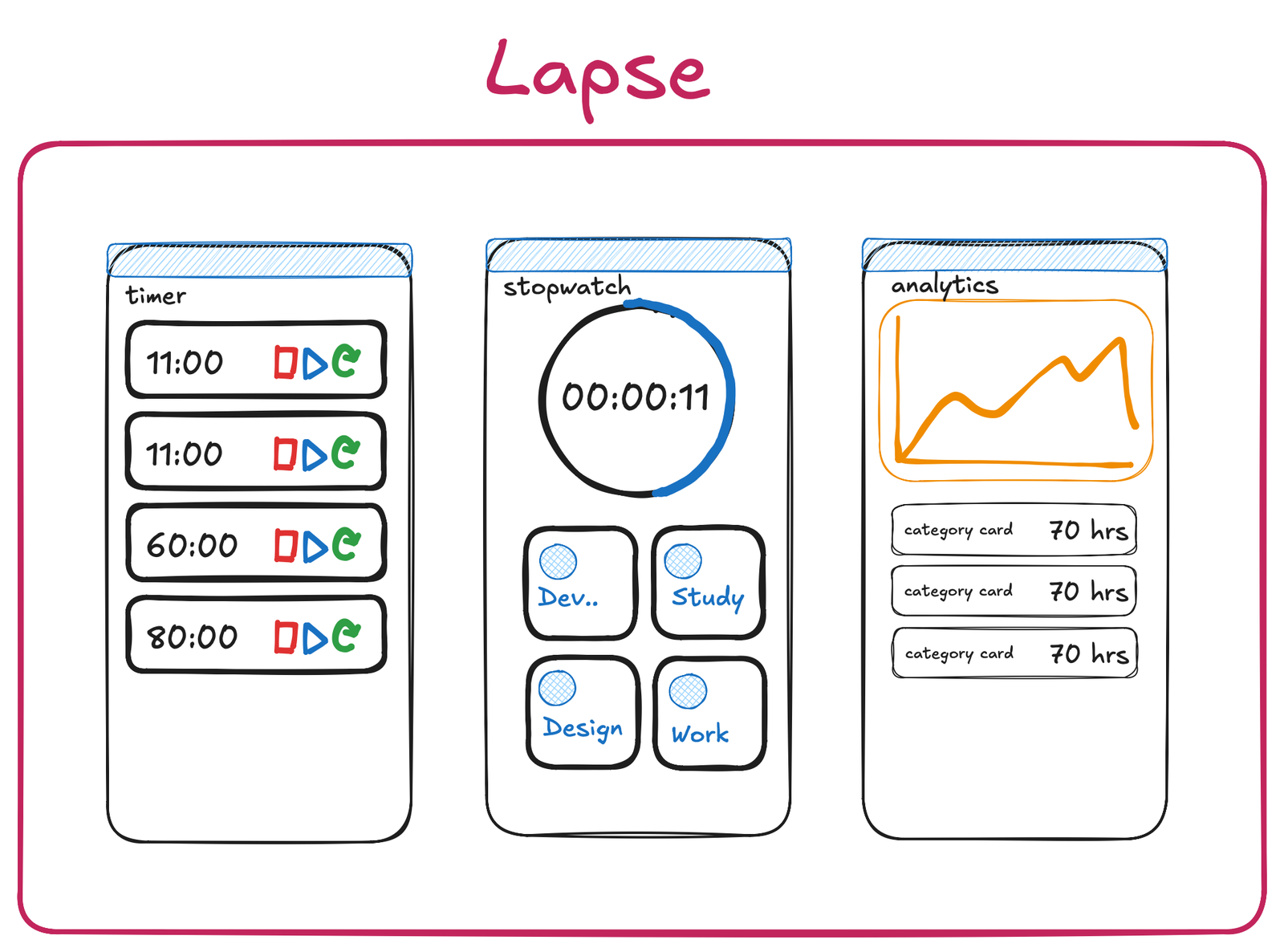
This is the part I did not expect to love. The wireframes started at fourteen screens. The third version had eight. What finally shipped had four. Every single time I deleted something I was certain mattered, the app breathed a little easier. Cutting became the craft.
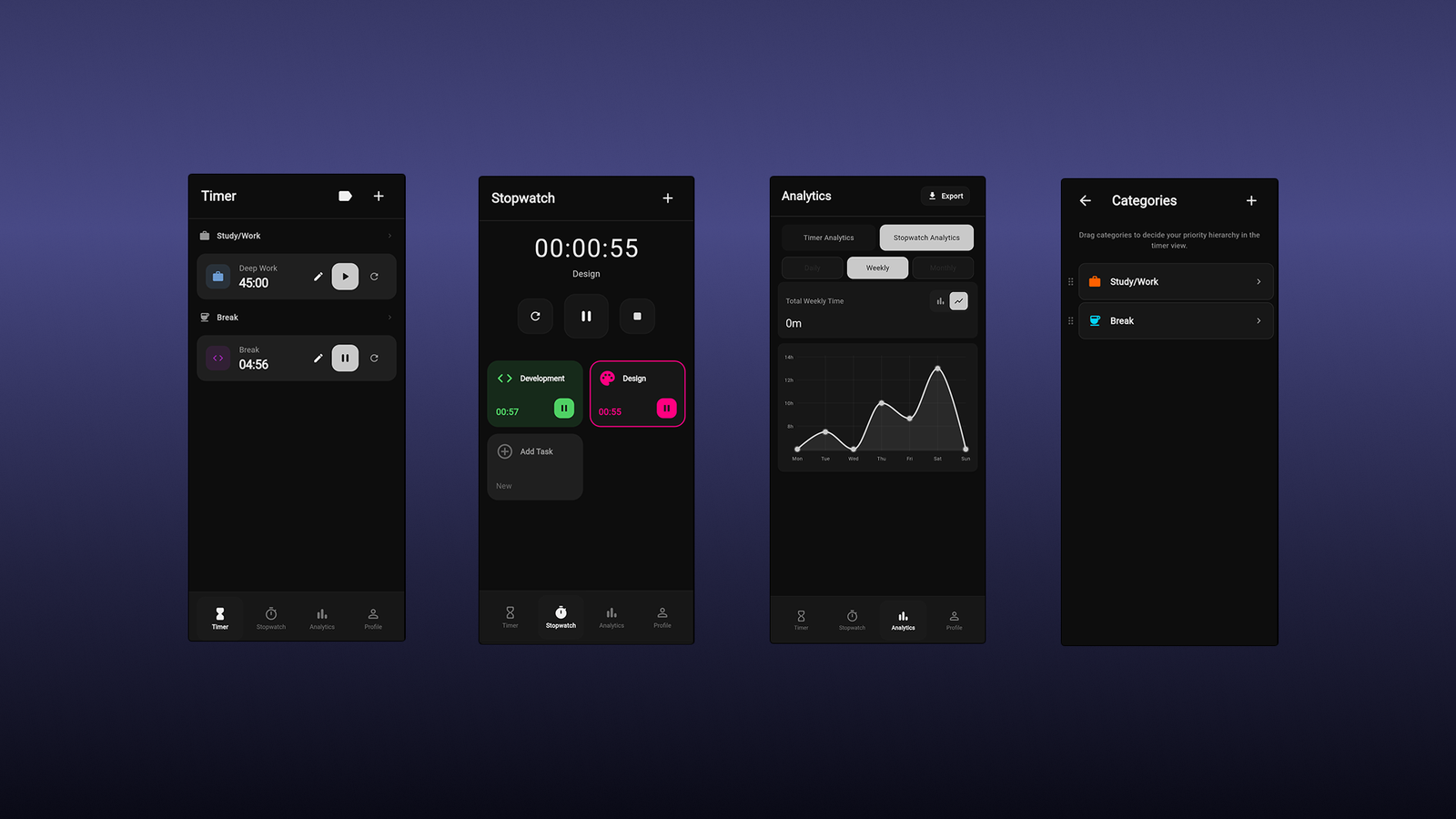
Four ideas held the whole thing together. Dark by default, because real focus happens late, in dim rooms, when the world has gone quiet. One warm accent against grayscale, because the less there was to look at, the more there was to focus on. A heatmap instead of streaks, where today glowed and yesterday simply let you go, no chain to break, no shame to carry. And custom intervals that belonged to you, any length you needed, never locked behind a payment.
The cuts I am proudest of are the ones that stung. Ambient sounds, almost poetic in a focus app, and distracting. Streaks. Social sharing. Calendar integration. Badges. Each one looked good written on a list. Each one would have quietly made the app worse.
Almost too quiet
Then Samiksha looked at the finished designs and said the thing I needed to hear and did not want to. It looks a little plain. A little dull. She was right, and it stung because she was right. The app had been so obsessed with restraint that it had walked straight past calm and into lifeless.
So I went back in, carefully. I gave the tasks their own identities. Green for development, pink for design, purple for breaks, blue for deep work, each category glowing with its own neon against the dark. Active timers pulsed with color instead of sitting there grey and silent. It was just enough to give the app a heartbeat without shattering the quiet. That single piece of honesty from Samiksha shipped inside the final product, and it is still one of the best notes anyone has ever given me.
The bug that ate two days
Of course something had to break, and it broke in the cruelest way. After login, if a user pressed the Android back button, the app would silently sign them out and drop them back at the login screen. It worked flawlessly in testing and fell apart the moment it was real. Two days of staring at authentication flows before I found it. The back gesture was wiping the session token before the screen had even finished loading. Nobody warns the design-led builder about nights like that. You just learn.
Live, and still learning
The most-used feature turned out to be the heatmap, the one I almost deleted three separate times. The average focus session runs forty-seven minutes, which quietly buried the idea that everyone lives on twenty-five-minute Pomodoro time. The thing people ask for most now is cloud sync, which I am designing as I write this.
Lapse is live today on the Google Play Store. Shipping it was never the finish line. It was the moment the project turned around and started teaching me instead.